
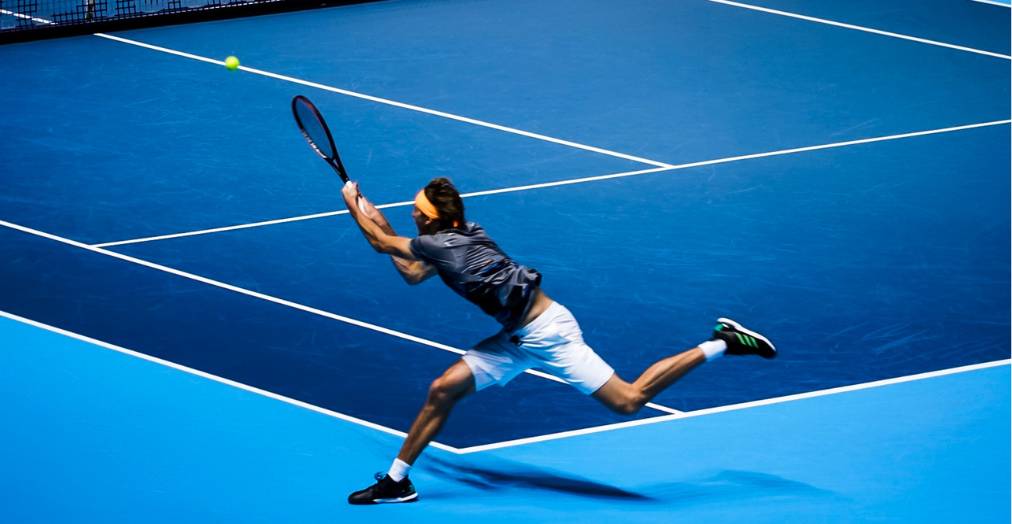
Mental strength is treated as a character trait: you either have it or you don’t. Alexander Zverev’s path to the US Open title suggests otherwise. The boy whose doctors talked him out of elite sport stands in front of 23,000 spectators who want him to lose, and stays calm. What we take for character is in truth a stage of development — and that confusion decides, every single day in our organisations, who we believe in and who we don’t.

an article by
Wolfgang Jenewein
“Good, but not good enough.” Alexander Zverev has heard that sentence for almost half his life.
The unfinished one. The eternal runner-up. The man with the best backhand on tour and the wrong head on his shoulders. He has lost four Grand Slam finals. New York in 2020, two sets up. Wimbledon, only this July. And because he is 29 now, the verdict had long since been handed down: his window has closed, the young ones are coming, he’ll never get there.
He could always play tennis. His serve and his backhand have been among the best this sport has to offer for ten years. What he lacked was never the technique. It was the head.
«Wir halten für Charakter, was in Wahrheit Entwicklungsstand ist und wundern uns dann, dass Menschen genau so werden, wie wir sie eingeschätzt haben.»
Wolfgang Jenewein
On 13 September 2026 then, Arthur Ashe Stadium. The largest tennis arena in the world, more than 23,000 spectators, the loudest and least disciplined crowd in the sport. And almost every one of them behind the American, Ben Shelton. For three hours and 33 minutes.
Zverev didn’t tremble. He didn’t waver. He stayed calm, upright, self-assured — point after point, even when Shelton took the third set and the arena erupted. 6:3, 7:6, 5:7, 6:2. The first German winner in New York since Boris Becker in 1989. After Roland Garros in June, his second Grand Slam of the year.
At the trophy ceremony he told his team: “We waited almost 30 years for this title, and now we have two in one year.” What impresses me most, though, isn’t the trophy. It’s the match point.
Zverev was so deep in the zone that at first he didn’t notice he had won
Zverev serves, he wins the point, the stadium rises to its feet — and he turns around and gets ready to return. He hadn’t noticed that he had won. That’s how deep he was in it. That’s how far inside the tunnel he was, and how little it mattered to him what was going on around him.
Albert Bandura called this self-efficacy: the conviction that you can handle a situation under your own power. His central finding wasn’t that some people have it and others don’t. It was that it grows with every experience you master. You can lose it. And you can win it back. Zverev is the proof.
Mindset isn’t a gift. Mindset can be developed
At the age of four he was diagnosed with type 1 diabetes. The doctors said at the time that elite sport would be out of the question. I see the same pattern in companies every day. We sort people out far too early. He’s leadership material, he isn’t. She can handle pressure, she can’t. We mistake for character what is in truth a stage of development — and then we’re surprised when people turn out exactly as we assessed them.
In Germany, too, there’s a lot of talk right now about stagnation, about lost years, about being left behind. A German in New York showed us something different last night: written off is not the same as finished. A little more Zverev would do us all good.